بلوغ المرام من كتاب نظام الإسلام (ح87) الإسلام عقيدة ونظم

الحَمْدُ للهِ ذِي الطَّولِ وَالإِنْعَامْ, وَالفَضْلِ وَالإِكرَامْ, وَالرُّكْنِ الَّذِي لا يُضَامْ, وَالعِزَّةِ الَّتِي لا تُرَامْ, والصَّلاةُ وَالسَّلامُ عَلَى سَيِّدِنَا مُحَمَّدٍ خَيرِ الأنَامِ, خَاتَمِ الرُّسُلِ العِظَامْ, وَآلِهِ وَصَحْبِهِ وَأتبَاعِهِ الكِرَامْ, الَّذِينَ طَبَّقُوا نِظَامَ الإِسلامْ, وَالتَزَمُوا بِأحْكَامِهِ أيَّمَا التِزَامْ, فَاجْعَلْنَا اللَّهُمَّ مَعَهُمْ, وَاحشُرْنا فِي زُمرَتِهِمْ, وثَبِّتنَا إِلَى أنْ نَلقَاكَ يَومَ تَزِلُّ الأقدَامُ يَومَ الزِّحَامْ.  ...

0:00 0:00
Speed:
September 24, 2024

بلوغ المرام من كتاب نظام الإسلام (ح87) الإسلام عقيدة ونظم

بلوغ المرام من كتاب نظام الإسلام

(ح87) الإسلام عقيدة ونظم

الحَمْدُ للهِ ذِي الطَّولِ وَالإِنْعَامْ, وَالفَضْلِ وَالإِكرَامْ, وَالرُّكْنِ الَّذِي لا يُضَامْ, وَالعِزَّةِ الَّتِي لا تُرَامْ, والصَّلاةُ وَالسَّلامُ عَلَى سَيِّدِنَا مُحَمَّدٍ خَيرِ الأنَامِ, خَاتَمِ الرُّسُلِ العِظَامْ, وَآلِهِ وَصَحْبِهِ وَأتبَاعِهِ الكِرَامْ, الَّذِينَ طَبَّقُوا نِظَامَ الإِسلامْ, وَالتَزَمُوا بِأحْكَامِهِ أيَّمَا التِزَامْ, فَاجْعَلْنَا اللَّهُمَّ مَعَهُمْ, وَاحشُرْنا فِي زُمرَتِهِمْ, وثَبِّتنَا إِلَى أنْ نَلقَاكَ يَومَ تَزِلُّ الأقدَامُ يَومَ الزِّحَامْ. 

أيها المؤمنون:

السَّلامُ عَلَيكُمْ وَرَحْمَةُ اللهِ وَبَرَكَاتُهُ وَبَعدُ: نُتَابِعُ مَعَكُمْ سِلْسِلَةَ حَلْقَاتِ كِتَابِنا "بلوغ المرام من كتاب نظام الإسلام" وَمَعَ الحَلْقَةِ السَّابِعَةِ وَالثَّمَانِينَ, وَعُنوَانُهَا: "الإِسلامُ عَقِيدَةٌ وَنُظُم". نَتَأمَّلُ فِيهَا مَا جَاءَ فِي الصَّفحَتين: الرَّابِعَةِ وَالسَّبعِينَ, وَالخَامِسَةِ وَالسَّبعِينَ مِنْ كِتَابِ "نظامُ الإسلام" لِلعَالِمِ وَالمُفَكِّرِ السِّيَاسِيِّ الشَّيخِ تَقِيِّ الدِّينِ النَّبهَانِيِّ.

يَقُولُ رَحِمَهُ اللهُ: "والإِسْلامُ عَقِيدَةٌ ونُظُمٌ، أَمَّا العَقِيدَةُ فَهِيَ الإِيمَانُ باللهِ ومَلائِكَتِهِ وكُتُبِهِ ورُسُلِهِ، وباليَوْمِ الآخِرِ، وبالقَضَاءِ والقَدَرِ خَيْرِهِمَا وشَرِّهِمَا مِنَ اللهِ تَعَالى. وقَدْ بَنَى الإِسْلامُ العَقِيدَةَ عَلَى العَقْلِ فِيمَا يُدْرِكُهُ العَقْلُ، كالإِيمَانِ باللهِ، وبِنُبُوَّةِ مُحَمَّدٍ r، وبالقُرْآنِ الكَرِيمِ، وبَنَاهَا في المُغَيَّبَاتِ، أَيْ مَا لا يُمْكِنُ للعَقْلِ أَنْ يُدْرِكَهُ كيَوْمِ القِيَامَةِ والمَلائِكَةِ والجَنَّةِ والنَارِ عَلَى التَسْلِيمِ، عَلَى أَنْ يَكُونَ مَصْدَرُهَا ثَابِتاً بالعَقْلِ وهُوَ القُرْآنُ الكَرِيمُ والحَدِيثُ المُتَوَاتِرُ. وقَدْ جَعَلَ الإِسْلامُ العَقْلَ مَنَاطَ التَكْلِيفِ.

أمَّا النُظُمُ فَهِيَ الأَحْكَامُ الشَرْعِيَّةُ الَّتِي تُنَظِّمُ شُؤُونَ الإِنْسَانِ، وقَدْ تَنَاوَلَ نِظَامُ الإِسْلامُ جَمِيعَ هَذِهِ الشُؤُونِ، ولَكِنَّهُ تَنَاوَلَهَا بِشَكْلٍ عَامٍّ، بِمَعَانٍ عَامَّةٍ، وتَرَكَ التَفْصِيلاتِ تُسْتَنْبَطُ مِنْ هَذِهِ المَعَانِي العَامَّةِ حِينَ إِجْرَاءِ التَطْبِيقَاتِ. فَقَدْ جَاءَ القُرْآنُ الكَرِيمُ والحَدِيثُ الشَرِيفُ يَتَضَمَّنَانِ خُطُوطَاً عَرِيضَةً، أَيْ مَعَانِيَ عَامَّةً لِمُعَالَجَةِ شُؤُونِ الإِنْسَانِ مِنْ حَيْثُ هُوَ إِنْسَانٌ، وتَرَكَ لِلْمُجْتَهِدِينَ أَنْ يَسْتَنْبِطُوا مِنْ هَذِهِ المَعَانِي العَامَّةِ الأَحْكَامَ الجُزْئِيَّةَ، للمَشَاكِلِ الَّتِي تَحْدُثُ عَلَى مَرِّ العُصُورِ واخْتِلافِ الأَمْكِنَةِ. وللإِسْلامِ طَرِيقَةٌ واحِدَةٌ في مُعَالَجَةِ المَشَاكِلِ، فَهُوَ يَدْعُو المُجْتَهِدَ لأَنْ يَدْرُسَ المُشْكِلَةَ الحَادِثَةَ حَتَّى يَفْهَمَهَا، ثُمَّ يَدْرُسَ النُصُوصَ الشَرْعِيَّةَ المُتَعَلِّقَةَ بِهَذِهِ المُشْكِلَةِ، ثُمَّ يَسْتَنْبِطَ حَلَّ هَذِهِ المُشْكِلَةِ مِنَ النُصُوصِ، أَيْ يَسْتَنْبِطَ الحُكْمَ الشَرْعِيَّ لِهَذِهِ المَسْأَلَةِ مِنَ الأَدِلَّةِ الشَرْعِيَّةِ، ولا يَسْلُكُ طَرِيقَةً غَيْرَهَا، مُطْلَقاً. عَلَى أَنَّه حِينَ يَدْرُسُ هَذِهِ المُشْكِلَةَ، يَدْرُسُهَا بِاعْتِبَارِهَا مُشْكِلَةً إِنْسَانِيَّةً لَيْسَ غَيْرُ، لا بِاعْتِبَارِهَا مُشْكِلَةً اقْتِصَادِيَّةً أَوْ اجْتِمَاعِيَّةً أَوْ مُشْكِلَةَ حُكْمٍ أَوْ غَيْرِ ذَلِكَ، بَلْ بِاعْتِبَارِهَا مَسْأَلَةً تَحْتَاجُ إِلَى حُكْمٍ شَرْعِيٍّ، حَتَّى يَعرِفَ حُكْمَ اللهِ فِيهَا".

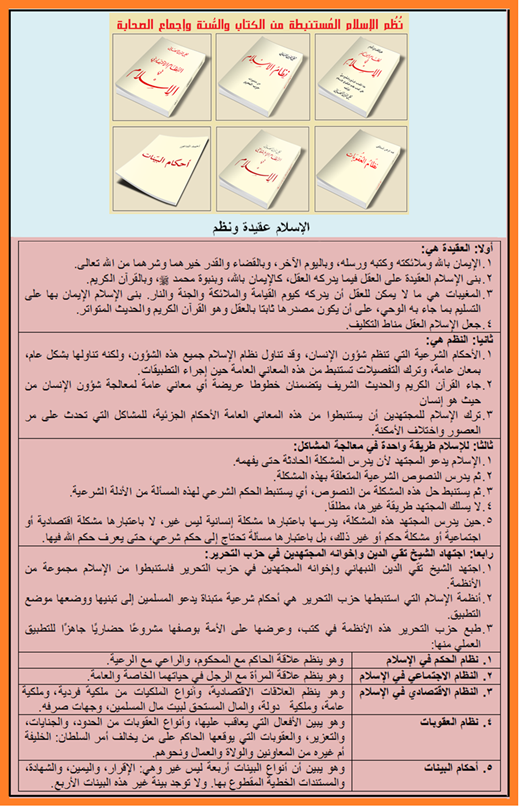
وَنَقُولُ رَاجِينَ مِنَ اللهِ عَفْوَهُ وَمَغْفِرَتَهُ وَرِضْوَانَهُ وَجَنَّتَهُ: بَعدَ أنْ بَيَّنَ الشَّيخُ تَقِيُّ الدِّينِ النَّبهَانِيُّ - رَحِمَهُ اللهُ - أنَّ الإِسلامَ لَيسَ فِيهِ رِجَالُ دِينٍ, وَلا فَصْلَ فِيهِ لِلدِّينِ عَنِ الحَيَاةِ, انتَقَلَ إِلَى الحَدِيثِ عَنْ عَقِيدَةِ الإِسلامِ, وَنُظُمِ الإِسلامِ, وَذَلِكَ فِي سِلسِلَةِ بِنَائِهِ الفِكرِيِّ لِعُقُولِنَا, نَحنُ الشَّبَابَ شَبَابَ حِزبِ التَّحرِيرِ, حَمَلَةَ الدَّعوَةِ, لِنَقُومَ بَعدَ ذَلِكَ بِدَورِنَا المَنُوطِ بِنَا, وَالمُلقَى عَلَى عَاتِقِنَا بِبِنَاءِ عُقُولِ أبنَاءِ أُمَّتِنَا بِقَدْرِ استِطَاعَتِنَا؛ لِنَصَلِ نَحنُ وَإِيَّاهُمْ إِلَى إِقَامَةِ دَولَةِ الخِلافَةِ الرَّاشِدَةِ عَلَى مِنهَاجِ النُّبوَّةِ الَّتِي يَرضَى عَنهَا اللهُ جَلَّ فِي عُلاهُ, وَيَرضَى عَنهَا أهلُ السَّمَاءِ وَأهلُ الأرضِ. وَيُمكِنُ إِجْمَالُ الأفكَارِ الوَارِدَةِ فِي هَذِهِ الفَقْرَةِ بِالنُّقَاطِ الآتِيَةِ:   

  1. الإِسْلامُ عَقِيدَةٌ ونُظُمٌ، أَمَّا العَقِيدَةُ فَهِيَ الإِيمَانُ باللهِ ومَلائِكَتِهِ وكُتُبِهِ ورُسُلِهِ، وباليَوْمِ الآخِرِ، وبالقَضَاءِ والقَدَرِ خَيْرِهِمَا وشَرِّهِمَا مِنَ اللهِ تَعَالى.
  2. بَنَى الإِسْلامُ العَقِيدَةَ عَلَى العَقْلِ فِيمَا يُدْرِكُهُ العَقْلُ، كالإِيمَانِ باللهِ، وبِنُبُوَّةِ مُحَمَّدٍ r، وبالقُرْآنِ الكَرِيمِ.
  3. بَنَى الإِسْلامُ العَقِيدَةَ في المُغَيَّبَاتِ، أَيْ مَا لا يُمْكِنُ للعَقْلِ أَنْ يُدْرِكَهُ كيَوْمِ القِيَامَةِ والمَلائِكَةِ والجَنَّةِ والنَارِ عَلَى التَسْلِيمِ، عَلَى أَنْ يَكُونَ مَصْدَرُهَا ثَابِتاً بالعَقْلِ وهُوَ القُرْآنُ الكَرِيمُ والحَدِيثُ المُتَوَاتِرُ.
  4. جَعَلَ الإِسْلامُ العَقْلَ مَنَاطَ التَكْلِيفِ.
  5. النُظُمُ هِيَ الأَحْكَامُ الشَرْعِيَّةُ الَّتِي تُنَظِّمُ شُؤُونَ الإِنْسَانِ.
  6. تَنَاوَلَ نِظَامُ الإِسْلامُ جَمِيعَ هَذِهِ الشُؤُونِ، ولَكِنَّهُ تَنَاوَلَهَا بِشَكْلٍ عَامٍّ، بِمَعَانٍ عَامَّةٍ، وتَرَكَ التَفْصِيلاتِ تُسْتَنْبَطُ مِنْ هَذِهِ المَعَانِي العَامَّةِ حِينَ إِجْرَاءِ التَطْبِيقَاتِ.
  7. جَاءَ القُرْآنُ الكَرِيمُ والحَدِيثُ الشَرِيفُ يَتَضَمَّنَانِ خُطُوطَاً عَرِيضَةً، أَيْ مَعَانِيَ عَامَّةً لِمُعَالَجَةِ شُؤُونِ الإِنْسَانِ مِنْ حَيْثُ هُوَ إِنْسَانٌ، وتَرَكَ لِلْمُجْتَهِدِينَ أَنْ يَسْتَنْبِطُوا مِنْ هَذِهِ المَعَانِي العَامَّةِ الأَحْكَامَ الجُزْئِيَّةَ، للمَشَاكِلِ الَّتِي تَحْدُثُ عَلَى مَرِّ العُصُورِ واخْتِلافِ الأَمْكِنَةِ.
Boloogh24 09 2024 

8- للإِسْلامِ طَرِيقَةٌ واحِدَةٌ في مُعَالَجَةِ المَشَاكِلِ, وَبَيَانُ هَذِهِ الطَّرِيقَةِ كَالآتِي:

  1. يَدْعُو الإِسلامُ المُجْتَهِدَ لأَنْ يَدْرُسَ المُشْكِلَةَ الحَادِثَةَ حَتَّى يَفْهَمَهَا.
  2. يَدْرُسُ المُجْتَهِدُ النُصُوصَ الشَرْعِيَّةَ المُتَعَلِّقَةَ بِهَذِهِ المُشْكِلَةِ.
  3. يَسْتَنْبِطَ المُجْتَهِدُ حَلَّ هَذِهِ المُشْكِلَةِ مِنَ النُصُوصِ، أَيْ يَسْتَنْبِطَ الحُكْمَ الشَرْعِيَّ لِهَذِهِ المَسْأَلَةِ مِنَ الأَدِلَّةِ الشَرْعِيَّةِ.
  4. لا يَسْلُكُ المُجْتَهِدُ طَرِيقَةً غَيْرَ هَذِهِ الطَّرِيقَةِ مُطْلَقاً.
  5. حِينَ يَدْرُسُ المُجْتَهِدُ هَذِهِ المُشْكِلَةَ، يَدْرُسُهَا بِاعْتِبَارِهَا مُشْكِلَةً إِنْسَانِيَّةً لَيْسَ غَيْرُ، لا بِاعْتِبَارِهَا مُشْكِلَةً اقْتِصَادِيَّةً أَوْ اجْتِمَاعِيَّةً أَوْ مُشْكِلَةَ حُكْمٍ أَوْ غَيْرِ ذَلِكَ، بَلْ بِاعْتِبَارِهَا مَسْأَلَةً تَحْتَاجُ إِلَى حُكْمٍ شَرْعِيٍّ، حَتَّى يَعرِفَ حُكْمَ اللهِ فِيهَا.

وَقَبلَ أنْ نُوَدِّعَكُمْ إِخوَانَنَا الكرام, وَأخَوَاتِنَا الكَرِيمَاتِ, بَقِيَ أنْ نَقُولَ لَكُم جَمِيعاً: لَقَدِ اجتَهَدَ الشَّيخُ تَقِيُّ الدِّينِ النَّبهَانِيُّ - رَحِمَهُ اللهُ - هُوَ وَإِخوَانُهُ مِنَ المُجتَهِدِينَ فِي حِزْبِ التَّحرِيرِ, فَاستَنبَطُوا مِنْ الإِسلامَ مَجمُوعَةً مِنَ النُّظُمِ, وَنُلَخِّصُ لَكُمُ الحَدِيثَ عَنهَا بِالنُّقَاطِ الآتِيَةِ:

1- استَنَد المجتهدون فِي هَذِهِ النُّظُمِ إِلَى الأَدِلَّةِ الشَّرعِيَّةِ الأربَعَةِ المُعتَبَرَةِ, وهي: الكِتَابُ وَالسُّنةُ, وَمَا أرشَدَا إِلَيهِ مِنْ إِجمَاعٍ الصَّحَابَةِ, وَالقِيَاسِ بِاجتِهَادٍ صَحِيحٍ.

2- نُظُمُ الإِسلامِ الَّتِي استَنبَطَهَا العُلَمَاءُ المُجتَهِدُونَ فِي حِزْبِ التَّحرِيرِ هِيَ أحكَامٌ شَرعِيَّةٌ مُتَبَنَّاةٌ, يَدعُو المُسلِمِينَ إِلَى تَبَنِّيهَا, وَوَضعِهَا مَوضَعِ التَّطبِيقِ العَمَلِيِّ الفَورِيِّ مِنْ خِلالِ دَولَةِ الخِلافَةِ الرَّاشِدَةِ الثَّانِيَةِ عَلَى مِنهَاجِ النُّبوَّةِ.

3- طَبَعَ حِزْبُ التَّحرِيرِ هَذِهِ النُّظُمَ فِي كُتُبٍ, وَعَرَضَهَا عَلَى الأُمَّةِ, بِوَصفِهَا كُتُبًا تَحمِلُ مَشرُوعاً حَضَارِيّاً جَاهِزاً لِلتَّطبِيقِ العَمَلِيِّ, نَذكُرُ لَكُمْ خَمسَةً مِنْ هَذِهِ النُّظُمِ وَالشُّؤُونِ الَّتِي تُنَظِّمُهَا:

  1. نِظَامُ الحُكْمِ فِي الإِسلامِ: وَهُوَ يُنَظِّمُ عَلاقَةَ الحَاكِمِ مَعَ المَحكُومِ, وَالرَّاعِي مَعَ الرَّعِيَّةِ.
  2. النِّظَامُ الاجتِمَاعِيُّ فِي الإِسلامِ: وَهُوَ يُنَظِّمُ عَلاقَةَ الرَّجُلِ مَعَ المَرأةِ فِي حَيَاتِهِمَا الخَاصَّةِ وَالعَامَّةِ.
  3. النِّظَامُ الاقتِصَادِيُّ فِي الإِسلامِ: وَهُوَ يُنَظِّمُ العَلاقَاتِ الاقتِصَادِيَّةِ, وَأنوَاعَ المِلكِيَّاتِ: مِنْ مِلكِيَّةٍ فَردِيَّةٍ, وَمِلكِيَّةٍ عَامَّةٍ, وَمِلكِيَّةِ دَولَةٍ. وَالمَالَ المُستَحَقَّ لِبَيتِ مَالِ المُسلِمِينَ, وَجِهَاتِ صَرفِهِ.
  4. نِظَامِ العُقُوبَاتِ: وَهُوَ يُبَيِّنُ الأفعَالَ الَّتِي يُعَاقِبُ عَلَيهَا, وَأنوَاعَ العُقُوبَاتِ: مِنَ الحُدُودِ وَالجِنَايَاتِ, وَالتَّعزِيرِ, وَالعُقُوبَاتِ الَّتِي يُوقِعُهَا الحَاكِمُ عَلَى مَنْ يُخَالِفُ أمْرَ السُّلطَانِ: الخَلِيفَةِ أم غَيرِهِ مِنَ المُعَاوِنِينَ, وَالوُلاةِ وَالعُمَّالِ وَنَحوِهِمْ.
  5. أحكَامُ البَيِّنَاتِ: وَهُو يُبَيِّنُ أنَّ أنوَاعَ البَيِّنَاتِ أربَعَةٌ لَيسَ غَيرَ, وَهِيَ: الإِقرَارُ, وَاليَمِينُ, وَالشَّهَادَةُ, وَالمُستَنَدَاتُ الخَطِّيةُ المَقطُوعُ بِهَا. وَلا تُوجَدُ بَيِّنَةٌ غَيرُ هَذِهِ البَيِّنَاتِ الأربَعِ.

أيها المؤمنون:

نَكتَفي بِهذا القَدْرِ في هَذِه الحَلْقة, وَلِلحَدِيثِ بَقِيَّةٌ, مَوعِدُنَا مَعَكُمْ في الحَلْقةِ القادِمَةِ إنْ شَاءَ اللهُ تَعَالَى, فَإِلَى ذَلِكَ الحِينِ وَإِلَى أَنْ نَلْقَاكُمْ وَدَائِماً, نَترُكُكُم في عنايةِ اللهِ وحفظِهِ وأمنِهِ, سَائِلِينَ الْمَولَى تَبَارَكَ وَتَعَالَى أَن يُعزَّنا بِالإسلام, وَأنْ يُعزَّ الإسلام بِنَا, وَأن يُكرِمَنا بِنَصرِه, وَأن يُقِرَّ أعيُننَا بِقيَامِ دَولَةِ الخِلافَةِ الرَّاشِدَةِ الثَّانِيَةِ عَلَىْ مِنْهَاْجِ النُّبُوَّةِ في القَريبِ العَاجِلِ, وَأَن يَجعَلَنا مِن جُنُودِهَا وَشُهُودِهَا وَشُهَدَائِها, إنهُ وَليُّ ذلكَ وَالقَادِرُ عَلَيهِ. نَشكُرُكُم, وَالسَّلامُ عَليك والشهادةُم وَرَحمَةُ اللهِ وَبَركَاتُه.

More from null

Reflections on the book: "Elements of the Islamic Psyche" - Episode Fifteen

Reflections on the book: "Elements of the Islamic Psyche"

Prepared by Professor Muhammad Ahmad Al-Nadi

Episode Fifteen

Praise be to God, Lord of the Worlds, and prayers and peace be upon the Imam of the pious, the Master of the Messengers, sent as a mercy to the worlds, our master Muhammad and all his family and companions. Make us with them, and gather us in their company, by your mercy, O Most Merciful of the merciful.

Dear listeners, listeners of the Media Office Radio of Hizb ut-Tahrir:

Peace, mercy, and blessings of God be upon you. In this episode, we continue our reflections on the book: "Elements of the Islamic Psyche." In order to build the Islamic personality, with attention to the Islamic mentality and the Islamic psyche, we say, with God's help: 

O Muslims:

We said in the last episode: It is also Sunnah for a Muslim to supplicate for his brother behind his back, just as it is Sunnah for him to ask his brother to supplicate for him. It is Sunnah for him to visit him, sit with him, keep in touch with him, and share with him for the sake of God after loving him. It is recommended for a Muslim to meet his brother with what he likes to please him with that. We add in this episode and say: It is recommended for a Muslim to give gifts to his brother, according to the hadith of Abu Hurairah, which was reported by Bukhari in Al-Adab Al-Mufrad, Abu Ya'la in his Musnad, Al-Nasa'i in Al-Kuna, and Ibn Abd Al-Barr in Al-Tamhid. Al-Iraqi said: The chain of narrators is good, and Ibn Hajar said in Al-Talkhis Al-Habir: Its chain of narrators is good, he said: The Messenger of God, may God bless him and grant him peace, said: "Exchange gifts, you will love one another." 

It is also recommended for him to accept his gift and reward him for it, according to the hadith of Aisha in Bukhari, who said: "The Messenger of God, may God bless him and grant him peace, used to accept gifts and reward for them."

And the hadith of Ibn Umar in Ahmad, Abu Dawood, and Al-Nasa'i, who said: The Messenger of God, may God bless him and grant him peace, said: "Whoever seeks refuge in God, grant him refuge, and whoever asks you in the name of God, give him, and whoever seeks protection in God, protect him, and whoever does you a favor, reward him, and if you do not find anything, then supplicate for him until you know that you have rewarded him."

This is between brothers, and it has nothing to do with the gifts of the subjects to the rulers, as they are like bribery, which is forbidden. And one of the rewards is to say: May God reward you with good. 

Al-Tirmidhi narrated from Usama bin Zaid, may God be pleased with them both, and said it is good and authentic, he said: The Messenger of God, may God bless him and grant him peace, said: "Whoever has a favor done to him and says to the one who did it: "May God reward you with good," then he has exaggerated in the praise." And praise is gratitude, i.e., reward, especially from someone who finds nothing else, as Ibn Hibban narrated in his Sahih from Jabir bin Abdullah, who said: I heard the Prophet, may God bless him and grant him peace, say: "Whoever is given a favor and does not find anything better than praise for it, then he has thanked him, and whoever conceals it has disbelieved, and whoever adorns himself with falsehood is like one who wears two garments of falsehood." And with a good chain of narrators, Al-Tirmidhi narrated from Jabir bin Abdullah, who said: The Messenger of God, may God bless him and grant him peace, said: "Whoever is given a gift and finds something to repay it with, let him repay it, and if he does not find anything, let him praise it, for whoever praises it has thanked him, and whoever conceals it has disbelieved, and whoever adorns himself with what he has not been given is like one who wears two garments of falsehood." And disbelieving in the gift means concealing and covering it up. 

With an authentic chain of narrators, Abu Dawood and Al-Nasa'i narrated from Anas, who said: "The Muhajirun said, "O Messenger of God, the Ansar have taken all the reward, we have not seen a people who are better at giving a lot, nor better at consoling in a little than them, and they have spared us the burden," he said: "Do you not praise them for it and supplicate for them?" They said: "Yes," he said: "That is for that." 

A Muslim should be grateful for the little as he is grateful for the much, and be grateful to the people who do him good, as Abdullah bin Ahmad narrated in his additions with a good chain of narrators from Al-Nu'man bin Bashir, who said: The Messenger of God, may God bless him and grant him peace, said: "Whoever is not grateful for the little, is not grateful for the much, and whoever is not grateful to the people, is not grateful to God, and talking about God's blessings is gratitude, and leaving it is disbelief, and the group is mercy, and division is torment."

It is Sunnah to intercede for one's brother for a benefit of righteousness or to facilitate a difficulty, as Al-Bukhari narrated from Abu Musa, who said: "The Prophet, may God bless him and grant him peace, was sitting when a man came asking, or seeking a need, he turned his face to us and said, "Intercede, so that you may be rewarded, and God will decree on the tongue of His Prophet what He wills."

And as Muslim narrated from Ibn Umar from the Prophet, may God bless him and grant him peace, who said: "Whoever is a connection for his Muslim brother to a person of authority for a benefit of righteousness or to facilitate a difficulty, will be helped to cross the Path on the day when feet slip."

It is also recommended for a Muslim to defend the honor of his brother behind his back, as Al-Tirmidhi narrated and said this is a good hadith from Abu Al-Darda' from the Prophet, may God bless him and grant him peace, who said: "Whoever defends the honor of his brother, God will ward off the fire from his face on the Day of Resurrection." This hadith of Abu Al-Darda' was narrated by Ahmad, and he said its chain of narrators is good, and Al-Haythami said the same. 

And what Ishaq bin Rahwayh narrated from Asma bint Yazid, who said: I heard the Messenger of God, may God bless him and grant him peace, say: "Whoever defends the honor of his brother behind his back, it is a right upon God to free him from the Fire." 

Al-Quda'i narrated in Musnad al-Shihab from Anas, who said: The Messenger of God, may God bless him and grant him peace, said: "Whoever supports his brother behind his back, God will support him in this world and the hereafter." Al-Quda'i also narrated it from Imran bin Hussein with the addition: "And he is able to support him." And as Abu Dawood and Al-Bukhari narrated in Al-Adab Al-Mufrad, and Al-Zain Al-Iraqi said: Its chain of narrators is good from Abu Hurairah that the Messenger of God, may God bless him and grant him peace, said: "The believer is the mirror of the believer, and the believer is the brother of the believer, from wherever he meets him, he protects him from his loss and surrounds him from behind."

O Muslims:

You have learned from the noble Prophetic hadiths mentioned in this episode and the previous episode that it is Sunnah for whoever loves a brother for the sake of God to inform him and let him know that he loves him. It is also Sunnah for a Muslim to supplicate for his brother behind his back. It is also Sunnah for him to ask his brother to supplicate for him. It is Sunnah for him to visit him, sit with him, keep in touch with him, and share with him for the sake of God after loving him. It is recommended for a Muslim to meet his brother with what he likes to please him with that. It is recommended for a Muslim to give gifts to his brother. It is also recommended for him to accept his gift and reward him for it.

A Muslim should be grateful to the people who do him good. It is Sunnah to intercede for one's brother for a benefit of righteousness or to facilitate a difficulty. It is also recommended for him to defend the honor of his brother behind his back. So why don't we adhere to these Sharia rulings and all the rulings of Islam, so that we may be as our Lord loves and is pleased with, so that He may change what is within us, improve our conditions, and we may win the best of this world and the hereafter?! 

Dear listeners: Listeners of the Media Office Radio of Hizb ut-Tahrir: 

We will suffice with this amount in this episode, with the understanding that we will complete our reflections in the coming episodes, God willing. Until that time and until we meet you, we leave you in God's care, protection, and security. We thank you for your kind listening, and peace, mercy, and blessings of God be upon you. 

Know, O Muslims! - Episode 15
November 14, 2025

Know, O Muslims! - Episode 15

Know, O Muslims!

Episode 15

Among the assisting bodies of the Khilafah state are the ministers whom the Caliph appoints to assist him in bearing the burdens of the Khilafah and fulfilling its responsibilities. The multitude of the Khilafah's burdens, especially as the Khilafah state grows and expands, makes it difficult for the Caliph to bear them alone, so he needs someone to help him bear them to fulfill its responsibilities. However, it is not correct to call them ministers without restriction, so that the meaning of the minister in Islam, which is in the sense of an assistant, is not confused with the meaning of the minister in the current man-made systems based on democratic, capitalist, secular, or other systems that we witness in the present era.