
بلوغ المرام من كتاب نظام الإسلام
(ح83) نظام الإسلام
الحَمْدُ للهِ ذِي الطَّولِ وَالإِنْعَامْ, وَالفَضْلِ وَالإِكرَامْ, وَالرُّكْنِ الَّذِي لا يُضَامْ, وَالعِزَّةِ الَّتِي لا تُرَامْ, والصَّلاةُ وَالسَّلامُ عَلَى سَيِّدِنَا مُحَمَّدٍ خَيرِ الأنَامِ, خَاتَمِ الرُّسُلِ العِظَامْ, وَآلِهِ وَصَحْبِهِ وَأتبَاعِهِ الكِرَامْ, الَّذِينَ طَبَّقُوا نِظَامَ الإِسلامْ, وَالتَزَمُوا بِأحْكَامِهِ أيَّمَا التِزَامْ, فَاجْعَلْنَا اللَّهُمَّ مَعَهُمْ, وَاحشُرْنا فِي زُمرَتِهِمْ, وثَبِّتنَا إِلَى أنْ نَلقَاكَ يَومَ تَزِلُّ الأقدَامُ يَومَ الزِّحَامْ.
أيها المؤمنون:
السَّلامُ عَلَيكُمْ وَرَحْمَةُ اللهِ وَبَرَكَاتُهُ وَبَعدُ: نُتَابِعُ مَعَكُمْ سِلْسِلَةَ حَلْقَاتِ كِتَابِنا "بلوغ المرام من كتاب نظام الإسلام" وَمَعَ الحَلْقَةِ الثَّالِثَةِ وَالثَّمَانِينَ, وَعُنوَانُهَا: "نظام الإسلام". نَتَأمَّلُ فِيهَا مَا جَاءَ فِي الصَّفحَةِ السَّبعِينَ مِنْ كِتَابِ "نظامُ الإسلام" لِلعَالِمِ وَالمُفَكِّرِ السِّيَاسِيِّ الشَّيخِ تَقِيِّ الدِّينِ النَّبهَانِيِّ.
يَقُولُ رَحِمَهُ اللهُ: "الإِسْلامُ هُوَ الدِينُ الَّذِي أَنْزَلَهُ اللهُ عَلَى سَيِّدِنَا مُحَمَّدٍ rلتنظيمِ عَلاقَةِ الإِنْسَانِ بخَالِقِهِ، وبِنَفْسِهِ، وبغَيْرِهِ مِنْ بَنِي الإِنْسَانِ. وعَلاقَةُ الإِنْسَانِ بخَالِقِهِ تَشْمُلُ العَقَائِدَ والعِبَادَاتِ، وعَلاقَتُهُ بِنَفْسِهِ تَشْمُلُ الأَخْلاقَ والمَطْعُومَاتِ والمَلْبُوسَاتِ، وعَلاقَتُهُ بغَيْرِهِ مِنْ بَني الإِنْسَانِ تَشْمُلُ المُعَامَلاتِ والعُقُوبَاتِ. فالإِسْلامُ مَبْدَأٌ لِشُؤُونِ الحَيَاةِ جَمِيعاً ولَيْسَ دِيناً لاهُوتِيّاً، ولا يَتَّصِلُ بالكَهَنُوتِيَّةِ بِسَبَبٍ. وإِنَّهُ لَيَقْضِي عَلَى الأُوتُوقْرَاطِيَّةِ الدِينِيَّةِ (الاسْتِبْدَادِ الدِينيِّ) فلا يُوجَدُ في الإِسْلامِ جَمَاعَةٌ تُسَمَّى رِجَالَ الدِينِ، وجَمَاعَةٌ تُسَمَّى رِجَالَ الدُنْيَا، بَلْ جَمِيعُ مَنْ يَعْتَنِقُونَ الإِسْلامَ يُسَمَّوْنَ مُسْلِمِينَ، وكُلُّهُمْ أَمَامَ الدِينِ سَوَاءٌ. فلا يُوجَدُ فِيهِ رِجَالٌ رُوحِيُّونَ، ورِجَالٌ زَمَنِيُّونَ. والنَاحِيَةُ الرُوحِيَّةُ فِيهِ هِيَ كَوْنُ الأَشْيَاءِ مَخْلُوقَةً لخَالِقٍ، ومُدَبَّرَةً بأَمْرِ هَذَا الخَالِقِ. لأَنَّ النَظْرَةَ العَمِيقَةَ للكَوْنِ والإِنْسَانِ والحَيَاةِ، ومَا حَوْلَهَا وما يَتَعَلَّقُ بِهَا، والاسْتِدْلالَ بذَلِكَ يُرِي الإِنْسَانَ النَقْصَ والعَجْزَ والاحْتِيَاجَ المُشَاهَدَ المَلْمُوسَ في هَذِهِ الأَشْيَاءِ جَمِيعِهَا، مِمَّا يَدُلُّ دَلالَةً قَطْعِيَّةً عَلَى أَنَّها مَخْلُوقَةٌ لخَالِقٍ، ومُدَبَّرَةٌ بأَمْرِهِ، وأَنَّ الإِنْسَانَ وهُوَ سَائِرٌ في الحَيَاةِ لا بُدَّ لَهُ مِنْ نِظَامٍ يُنَظِّمُ غَرَائِزَهُ وحاجاتِهِ العُضْوِيَّةَ. ولا يَتَأَتَّى هَذَا النِظَامُ مِنَ الإِنْسَانِ، لِعَجْزِهِ وعَدَمِ إِحَاطَتِهِ، ولأَنَّ فَهْمَهُ لِهَذَا التَنْظِيمِ عُرْضَةٌ لِلتَّفَاوُتِ والاخْتِلافِ والتَنَاقُضِ مِمَّا يُنْتِجُ النِظَامَ المتُنَاقِضَ المُؤَدِّيَ إِلَى شَقَاءِ الإِنْسَانِ, ولذَلِكَ كَانَ حَتْمَاً أَنْ يَكَوْنَ النِظَامُ مِنَ اللهِ تَعَالى".
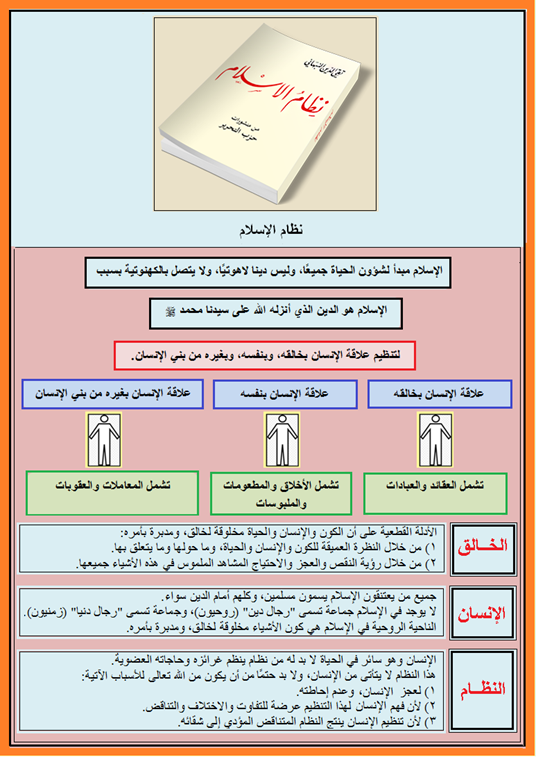
وَنَقُولُ رَاجِينَ مِنَ اللهِ عَفْوَهُ وَمَغْفِرَتَهُ وَرِضْوَانَهُ وَجَنَّتَهُ: يُعَرِّفُ الشَّيخُ تَقِيُّ الدِّينِ النَّبهَانِيُّ الإِسلامَ بِأنَّهُ: الدِينُ الَّذِي أَنْزَلَهُ اللهُ عَلَى سَيِّدِنَا مُحَمَّدٍ e لتنظيمِ عَلاقَةِ الإِنْسَانِ بخَالِقِهِ، وبِنَفْسِهِ، وبغَيْرِهِ مِنْ بَنِي الإِنْسَانِ, وَيُمكِنُ إِجْمَالُ الأفكَارِ الوَارِدَةِ فِي هَذِهِ الفَقْرَةِ بِالنُّقَاطِ الآتِيَةِ:
1. عَلاقَةُ الإِنْسَانِ بخَالِقِهِ تَشْمُلُ العَقَائِدَ والعِبَادَاتِ، وعَلاقَتُهُ بِنَفْسِهِ تَشْمُلُ الأَخْلاقَ والمَطْعُومَاتِ والمَلْبُوسَاتِ, وعَلاقَتُهُ بغَيْرِهِ مِنْ بَني الإِنْسَانِ تَشْمُلُ المُعَامَلاتِ والعُقُوبَاتِ.
2. الإِسْلامُ مَبْدَأٌ لِشُؤُونِ الحَيَاةِ جَمِيعاً، ولَيْسَ دِيناً لاهُوتِيّاً، ولا يَتَّصِلُ بالكَهَنُوتِيَّةِ بِسَبَبٍ. وإِنَّهُ لَيَقْضِي عَلَى الأُوتُوقْرَاطِيَّةِ الدِينِيَّةِ أي (الاسْتِبْدَادِ الدِينيِّ).
3. لا يُوجَدُ في الإِسْلامِ جَمَاعَةٌ تُسَمَّى رِجَالَ الدِينِ، وجَمَاعَةٌ تُسَمَّى رِجَالَ الدُنْيَا، بَلْ جَمِيعُ مَنْ يَعْتَنِقُونَ الإِسْلامَ يُسَمَّوْنَ مُسْلِمِينَ، وكُلُّهُمْ أَمَامَ الدِينِ سَوَاءٌ.
4. النَاحِيَةُ الرُوحِيَّةُ فِي الإِسلامِ هِيَ كَوْنُ الأَشْيَاءِ مَخْلُوقَةً لخَالِقٍ، ومُدَبَّرَةً بأَمْرِ هَذَا الخَالِقِ.
5. الإِنْسَانُ وهُوَ سَائِرٌ في الحَيَاةِ لا بُدَّ لَهُ مِنْ نِظَامٍ يُنَظِّمُ غَرَائِزَهُ وحاجاتِهِ العُضْوِيَّةَ.
6. لا يَتَأَتَّى هَذَا النِظَامُ مِنَ الإِنْسَانِ, وَلا بُدَّ حَتْماً مِنَ أَنْ يَكَوْنَ مِنَ اللهِ تَعَالَى لِثَلاثَةِ أسبَابٍ:
1) لِعَجْزِ الإِنسَانِ, وعَدَمِ إِحَاطَتِهِ.
2) لأَنَّ فَهْمَ الإِنسَانِ لِهَذَا التَنْظِيمِ عُرْضَةٌ لِلتَّفَاوُتِ والاخْتِلافِ والتَنَاقُضِ.
3) لأَنَّ تَنظِيمَ الإِنسَانِ يُنْتِجُ النِظَامَ المتُنَاقِضَ المُؤَدِّيَ إِلَى شَقَائِهِ.
وَقَبلَ أنْ نُوَدِّعَكُمْ إِخَوَتَنَا الكِرَامَ بَقِيَ أنْ نُوَضِّحَ مَعنَى العِبَارَةِ الآتِيَةِ الوَارِدَةِ فِي الفَقرَةِ السَّابِقَةِ وَهِيَ قَولُهُ: "إنَّ فَهْمَ الإِنسَانِ لِهَذَا التَنْظِيمِ عُرْضَةٌ لِلتَّفَاوُتِ والاخْتِلافِ والتَنَاقُضِ".
لَقَد سُئِلَ أمِيرُنَا الحَالِيُّ, أمِيرُ حِزْبِ التَّحرِيرِ العَالِمُ الجَلِيلُ, وَالمُفَكِّرُ السِّيَاسِيُّ عَطَاءُ بْنُ خَلِيل أبُو الرَّشتَةَ - حَفِظَهُ اللهُ وَأعَزَّهُ وَنَصَرَهُ - هَذَا السُّؤَالَ فَأجَابَ إِجَابَةً شَافِيَةً وَافِيَةً, أقتَبِسُ لَكُمْ مِنهَا مَا يَأتِي: "إنَّ النَّصَّ الذِي تُشِيرُ إِلَيهِ فِي كِتَابِ "نِظَامُ الإِسلام" هو التالي: "وَالدَّلِيلُ أيضاً عَلَى حَاجَةِ النَّاسِ إِلَى الرُّسُلِ هُوَ أنَّ الإِنسَانَ بِحَاجَةٍ إِلَى إِشْباعِ غَرَائِزِه وَحَاجَاتِهِ العُضوِيَّةِ، وَهَذَا الإشبَاعُ إِذَا سَارَ دُونَ نِظَامٍ يُؤَدِّي إِلَى الإشْباعِ الخَطَأِ أو الشَّاذِّ, ويُسَبِّبُ شَقَاءَ الإِنسَانِ، فَلا بُدَّ منْ نِظَامٍ يُنظِّمُ غَرائِزَ الإِنسَانِ وَحَاجَاتِهِ العُضْوِيَّةَ، وَهَذَا النِّظَامُ لا يَأتِي مِنَ الإِنسَانِ، لأَنَّ فَهْمَهُ لِتَنظِيمِ غَرَائِزِ الإِنسَانِ, وَحَاجَاتِهِ العُضْوِيَّةِ عُرْضَةٌ لِلتَّفَاوُتِ, وَالاختِلافِ, وَالتَنَاقُضِ, والتَأَثُّرِ بِالبِيئَةِ الَّتِي يَعِيشُ فِيهَا، فَإِذا تُرِكَ ذَلِكَ لَهُ كَانَ النِّظَامُ عُرْضَةً لِلتَّفَاوُتِ, وَالاختِلافِ, وَالتَّنَاقُضِ, وَأدَّى إِلَى شَقَاءِ الإِنسَانِ فَلا بُدَّ مِنْ أنْ يَكُونَ النِّظَامُ مِنَ اللهِ تعالى".
انتَهَى اقتِبَاسُ الشَّيخِ مِنْ كِتَابِ (نِظَامُ الإِسلامِ). ثُمَّ قَالَ - حَفِظَهُ اللهُ -: وَهُوَ يَتَحَدَّثُ عَنْ فَهْمِ الإِنسَانِ لِتَنظِيمِ الغَرَائِزِ, وَالحَاجَاتِ العُضوِيَّةِ, وَيُبَيِّنُ أنَّ هَذَا الفَهْمَ الإِنسَانِيَّ تَعتَرِيهِ أربَعَةُ أُمُورٍ تُؤَثِّرُ فِي أَحكَامِهِ المُتَعَلِّقَةِ بِتَنظِيمِ الغَرَائِزِ وَالحَاجَاتِ العُضوِيَّةِ, وَتَجعَلُ هَذَا الفَهْمَ غَيرَ مُستَقِيمٍ وَغَيرَ صَحِيحٍ, وَهَذِهِ الأُمُورُ الأربَعَةُ وَإِن كَانَتْ مُتَعَلِّقَةً بِالفَهْمِ إِلَّا أنَّهَا لَيسَتْ شَيئاً وَاحِداً.
وَقَبلَ أنْ أُفَصِّلَهَا فَمِنَ الجَدِيرِ ذِكْرُهُ أنَّ هَذِهِ الأُمُورَ قَدْ تَحدُثُ فِي الفَهْمِ مِنَ الشَّخْصِ الوَاحِدِ، فَيَكُونُ فَهْمُهُ لِتَنظِيمِ الغَرِيزَةِ هَذَا اليَومَ كَذَا، وَفِي اليَومِ التَّالِي كَذَا, وَقَدْ تَحدُثُ فِي الفَهْمِ بَينَ شَخْصٍ وَبَينَ آخَرَ، فَهَذَا يَفُهَمُ تَنظِيمَ الغَرِيزَةِ عَلَى نَحْوٍ مُعَيَّنٍ، وَذَاكَ يَفهَمُهَا عَلَى نَحْوٍ آخَرَ، وَلِذَلِكَ مَا نُفَصِّلُهُ أدْنَاهُ قَد يَكُونُ مِنَ الشَّخْصِ نَفسِهِ فَيَختَلِفُ بِاختِلافِ الأمكِنَةِ وَالأزمِنَةِ، وَقَد يَكُونُ بَينَ شَخْصٍ وَآخَرَ. أَمَّا عَنْ مَعَانِيهَا فَكَمَا يَلِي:
أولا: التفاوت: التَّفَاوُتُ فِي فَهْمِ تَنظِيمِ الغَرَائِزِ يَعنِي أفهَاماً مُتَنَوِّعَةً يَبتَعِدُ أحَدُهُمَا عَنِ الآخَرِ بُعداً شَاسِعاً، وَعَادَةً مَا يَتَخَلَّلُ هَذِهِ الأفهَامَ قُصُورٌ وَعُيُوبٌ نَتِيجَةَ الجَهْلِ وَالاضطِرَابِ، وَعَدَمِ وُجُودِ قَاعِدَةٍ أسَاسِيَّةٍ يُبنَى الفَهْمُ عَلَيهَا، سَوَاءٌ أكَانَ هَذَا التَّفَاوُتُ بَينَ رَأيَينِ لِلشَّخْصِ نَفسِهِ اليَومَ وَغَداً، أمْ كَانَ الرَّأيَانِ لِشَّخصَينِ، فَالتَّفَاوُتُ بَينَهُمَا فِي تَنظِيمِ الغَرَائِزِ هُوَ أنْ يَتَبَاعَدَ الرَّأيَانِ كَثِيراً وَدُونَمَا مِقْيَاسٍ فِكرِيٍّ لأيٍّ مِنهُمَا, بَلْ يُخَالِطُ هَذَا التَّبَاعُدَ جَهْلٌ وَاضطِرَابٌ, وَلِذَلِكَ كَثِيراً مَا يَكُونُ الرَّأيَانِ فِي تَنظِيمِ الغَرِيزَةِ خَطَأ, وَقَلِيلاً مَا يَكُونُ أحَدُهُمَا صَوَاباً, وَلَكِنْ لا يَكُونُ كِلاهُمَا صَوَاباً، وَذَلِكَ لِمَا تَحمِلُهُ كَلِمَةُ تَفَاوُتٍ فِي اللُّغَةِ مِنْ تَبَاعُدٍ شَاسِعٍ بَينَ الرَّأيَينِ مَعَ الجَهْلِ وَالاضطِرَابِ.
ثانيا: الاختلاف: الاختِلافُ فِي فَهْمِ تَنظِيمِ الغَرَائِزِ يَعنِي أفْهَاماً مُتَنَوِّعَةً وَفْقَ مَقَايِيسَ عِندَ هَذَا وَعِندَ ذَاكَ، فَيَرَى الأوَّلُ أنَّ مِلكِيَّةَ المَالِ لَهَا أسبَابٌ, وَهُوَ يَتَّبِعُ هَذِهِ الأسبَابَ، وَأنَّ تَنمِيَةَ المِلْكِيَّةِ لَهَا أسبَابٌ يَأخُذُ بِهَا، وَيَرَى الآخَرُ أسبَاباً غَيرَ الأسبَابِ الَّتِي يَأخُذُ بِهَا الأوَّلُ, وَلِذَلِكَ فَإِنَّ هَذَا الاختِلافَ قَد يَكُونُ فِيهِ الصَّوَابُ وَالخَطأُ, وَذَلِكَ وَفْقَ المِقيَاسِ الَّذِي يُبنَى عَلَيهِ؛ لأنَّهُ مَبنِيٌّ عَلَى مِقيَاسٍ مُعَيَّنٍ، وَتَفكِيرٍ، وَتَخطِيطٍ حَولَ فَهْمِ التَّنظِيمِ ... إلخ. وَهَكَذَا اختِلافُ المَذَاهِبِ وَالمُفَكِّرِينَ فَقَدْ يُصِيبُ بَعضُهُمْ وَيُخطِئُ بَعضُهُمْ وَفْقَ القَاعِدَةِ الفِكرِيَّةِ المُتَّبَعَةِ, وَلِذَلِكَ فَكَثِيراً مَا يَكُونُ أحَدُ الرَّأيَينِ صَوَاباً, وَيُمكِنُ أنْ يَكُونَ لِكُلٍّ مِنَ الرَّأيَينِ وَجْهٌ مِنَ الصِّحَّةِ حَسَبَ مِقيَاسِهِ المُعتَمَدِ كَأصْحَابِ المَذَاهِبِ وَبَعضِ المُفَكِّرِينَ, وَيُمكِنُ أنْ يَكُونَ الرَّأيَانِ المُختَلِفَانِ خَطَأ.
ثالثا: التناقض: وَهُوَ أنْ يَصِلَ التَّبَايُنُ بَينَ النَّاسِ فِي الفَهْمِ وَالحُكْمِ إِلَى حَدِّ التَّنَاقُضِ التَّامِّ مِنْ كُلِّ وَجْهٍ فِي المَسألَةِ الوَاحِدَةِ، فَكَأنَّ أحَدَ القَولَينِ يَهدِمُ القَولَ الآخَرَ. جَاءَ فِي لِسَانِ العَرَبِ: (نَقَضَ): النَّقْضُ: إِفْسَادُ مَا أَبْرَمْتَ مِنْ عَقْدٍ أَو بِنَاءٍ، وَفِي الصِّحَاحِ: النَّقْضُ نَقْضُ البِنَاءِ وَالحَبْلِ وَالعَهْدِ. غَيْرُهُ: النَّقْضُ ضِدُّ الإِبْرام.
وَلِكَي نُوَضِّحَ الفَرقَ بَينَ هَذِهِ الثَّلاثَةِ نَذكُرُ مِثَالاً عَنْ غَرِيزَةِ البَقَاءِ, وَمِنْ مَظَاهِرِهَا التَّمَلُّكُ:
1. الاختلاف: يَكُونُ الاختِلافُ فِي هَذِهِ المَسأَلَةِ كَأنْ يَرَى أحَدُهُمَا أنْ يُنَمِّيَ مُلكَهُ بِشَرِكَةِ العَنَانِ, وَيَرَى الآخَرُ بِالشَّرِكَةِ المُسَاهَمَةِ، أي بِسَبَبٍ مُختَلِفٍ.
2. التفاوت: وَيَكُونُ التَّفَاوُتُ: بِأنْ يَرَى أحَدُهُمَا أنْ يُطْلِقَ المِلْكِيَّةَ بِأَيِّ مِقدَارٍ, وَيَرَى الآخَرُ أنْ يُحَدِّدَهَا بِمِقْدَارٍ ضَئِيلٍ يُبقِيهِ حَيّاً.
3. التناقض: وَيَكُونُ التَّنَاقُضُ: بِأْن يَرَى أحَدُهُمَا جَوَازَ المِلْكِيَّةِ الفَردِيَّةِ, وَيَرَى الآخَرُ إِلغَاءَ المِلْكِيَّةِ الفَردِيَّةِ.
رابعًا: التأثر بالبيئة: وَهَذَا عَامِلٌ رَابِعٌ يُؤَثِّرُ فِي فَهْمِ الإِنسَانِ لِلأُمُورِ لأَنَّ كُلَّ إِنسَانٍ يَنشَأُ فِي بِيئَةٍ مُعَيَّنَةٍ فِيهَا أحكَامٌ سَائِدَةٌ، وَعَقْلُهُ يِتَأثَّرُ دُونَ شَكٍّ بِالبِيئَةِ الَّتِي حَولَهُ سَلباً وَإِيجَاباً، فَقَدْ تُؤَثِّرُ فِيهِ بِيئَتُهُ فَيَستَسِيغُ أُمُوراً لا يَستَسِيغُهَا مَنْ يَعِيشُ فِي بِيئَةٍ أُخرَى، وَقَدْ تُؤَثِّرُ فِيهِ بِيئَتُهُ فَيَمقُتُ بَعْضَ مَا هُوَ سَائِدٌ فِيهَا, وَيَنفِرُ مِنهُ وَلا يَستَسِيغُهُ, فَإِنْ تُرِكَ تَنظِيمُ الغَرَائِزِ لِلإِنسَانِ فَقَدْ تُصبِحُ بِيئَتُهُ مَصْدَراً لِفَهْمِهِ وَلأحكَامِهِ, وَلِهَذَا كَانَ مِنَ الخَطَأ أنْ تُؤخَذَ الأحكَامُ مِنَ الوَاقِعِ, بَلْ يَكُونُ الوَاقِعُ مَوضِعَ العِلاجِ, وَلَيسَ مَصدَرَهُ. فَهَذِهِ الأُمُورُ الأربَعَةُ تَجعَلُ أحكَامَ الإِنسَانِ فِي تَنظِيمِ إِشبَاعِ الغَرَائِزِ وَالحَاجَاتِ العُضوِيَّةِ مُنطَبِعَةً بِهَا فَتَأتِي أحكَامُ الإِنسَانِ مُتُفُاوِتَةً وَمُختَلِفَةً وَمُتَنَاقِضَةً وَمُتَأثِّرَةً بِالبِيئَةِ فِي المَسأَلَةِ الوَاحِدَةِ, وَلِذَلِكَ فَإِنَّ العَقْلَ البَشَرِيَّ غَيرُ قَادِرٍ عَلَى إِيجَادِ تَنظِيمٍ صَحِيحٍ لإِشبَاعِ الغَرَائِزِ وَالحَاجَاتِ العُضوِيَّةِ. أمَّا النِّظَامُ الَّذِي يَأتِي مِنَ اللهِ سُبحَانَهُ, فَهُوَ مِنْ خَالِقِ البَشَرِ, وَهُوَ لَيسَ عُرضَةً لِهَذِهِ الأُمُورِ الأربَعَةِ، فَيَكُونُ هُوَ النِّظَامَ الصَّحِيحَ الَّذِي يَجِبُ السَّيرُ بَحَسَبِهِ. هَذَا هُوَ الحَقُّ (فَمَاذَا بَعْدَ الْحَقِّ إِلَّا الضَّلَالُ)؟ جَزَى اللهُ أَمِيرَنَا عَطَاءَ بنَ خَليل أبُو الرَّشتَةَ خَيرَ الجَزَاءِ عَلَى هَذِه الإِجَابَةِ المُستَفِيضَةِ, وأعَزَّهُ وَنَصَرَهُ. آمِينَ يَا رَبَّ العَالَمِينَ!!
أيها المؤمنون:
نَكتَفي بِهذا القَدْرِ في هَذِه الحَلْقة, وَلِلحَدِيثِ بَقِيَّةٌ, مَوعِدُنَا مَعَكُمْ في الحَلْقةِ القادِمَةِ إنْ شَاءَ اللهُ تَعَالَى, فَإِلَى ذَلِكَ الحِينِ وَإِلَى أَنْ نَلْقَاكُمْ وَدَائِماً, نَترُكُكُم في عنايةِ اللهِ وحفظِهِ وأمنِهِ, سَائِلِينَ الْمَولَى تَبَارَكَ وَتَعَالَى أَن يُعزَّنا بِالإسلام, وَأنْ يُعزَّ الإسلام بِنَا, وَأن يُكرِمَنا بِنَصرِه, وَأن يُقِرَّ أعيُننَا بِقيَامِ دَولَةِ الخِلافَةِ الرَّاشِدَةِ الثَّانِيَةِ عَلَىْ مِنْهَاْجِ النُّبُوَّةِ في القَريبِ العَاجِلِ, وَأَن يَجعَلَنا مِن جُنُودِهَا وَشُهُودِهَا وَشُهَدَائِها, إنهُ وَليُّ ذلكَ وَالقَادِرُ عَلَيهِ. نَشكُرُكُم عَلى حُسنِ استِمَاعِكُم, وَالسَّلامُ عَليكُم وَرَحمَةُ اللهِ وَبَركَاتُه.


